Retatrutide: how does the triple agonist work for weight loss with over 28% of starting weight?
Retatrutide is an experimental weight loss peptide from Eli Lilly. It works by a mechanism similar to that of the weight loss injections already known in our country – GLP-1 agonists.
But with one significant difference: retatrutide activates three different hormone receptors simultaneously, not just one or two. [1].
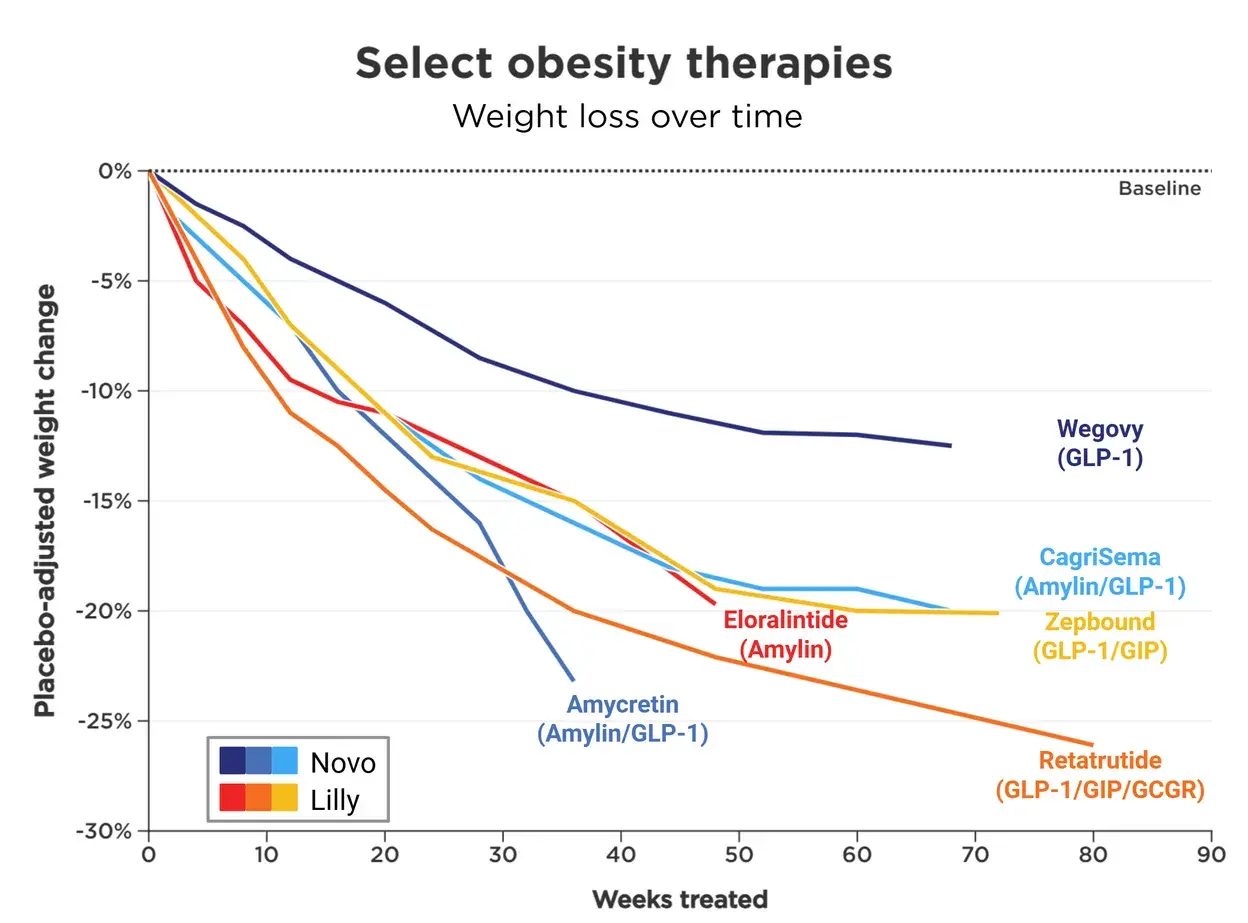
It is precisely because of this triple action that retatrutide is the incretin mimetic that shows the greatest weight loss reported so far in clinical trials with weight loss medications.
However, as of 2026, retatrutide is NOT APPROVED for use in humans outside of clinical trials.
If you think you need weight loss medication, consult a qualified doctor, who can offer you approved and safe treatment – by 2026 these are Vegovi and Mundzharro.
In this article, we will take a detailed look at what retatrutide is, how its molecule is structured, and how exactly it works in the body.
What is Retatrutide?
Retatrutide is a peptide codenamed LY3437943, synthesized by Eli Lilly, with the first data on it published in 2022. [1].
It belongs to a group of drugs called incretin mimetics, which are drugs that mimic the action of natural gut hormones called incretins.
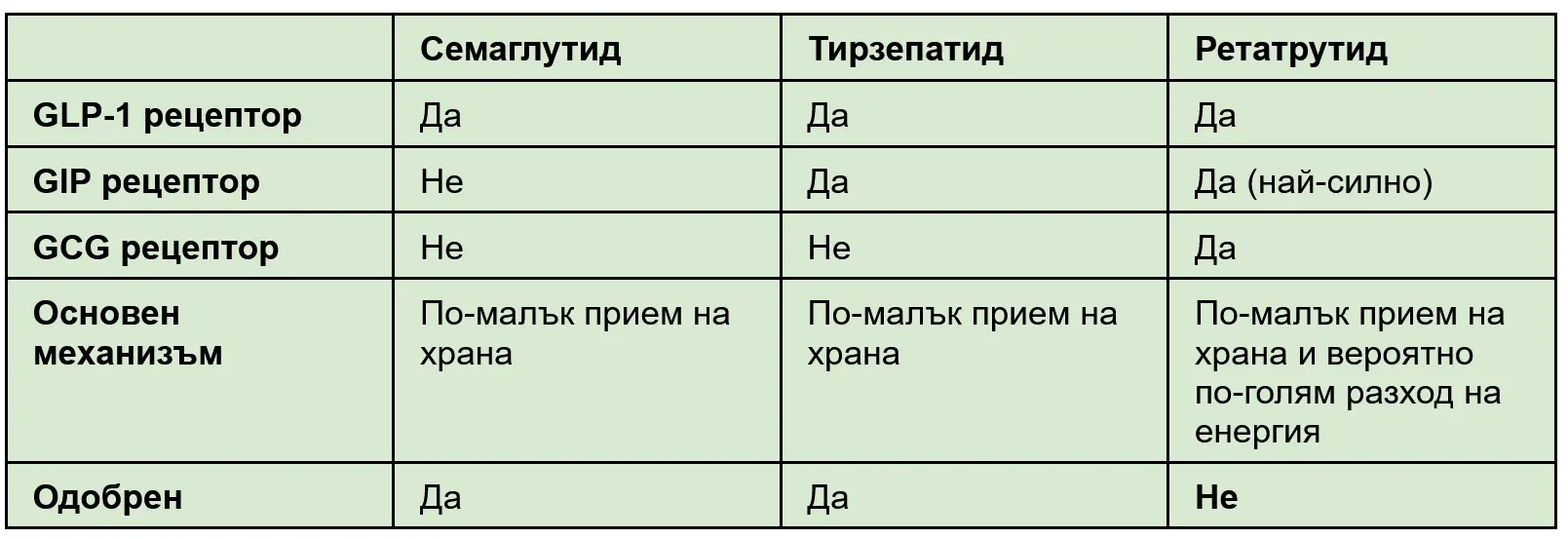
The currently known drugs in this group act in the following way:
- Semaglutide (Ozempik, Vegovi) activates only the GLP-1 receptor.
- Tirzepatide (Munjaro, Zepbound) activates GLP-1 and GIP receptors.
Retatrutide is a single molecule that simultaneously activates the receptors for GLP-1, GIP, and glucagon (GCG). For this reason, retatrutide is called a triple agonist.
It is important to know that as of 2026, retatrutide is still not approved for use in any country. [2]. Products labeled "retratrutide" that are available online are illegal and of unknown content.
How the retatrutide molecule is structured
Retatrutide is a peptide composed of 39 amino acids. It is created based on the natural hormone GIP, with several targeted changes made to its structure [3],[4]:
- Position 2 is replaced with an unnatural amino acid (Aib). This protects the molecule from degradation by the enzyme DPP-4, which normally breaks down natural incretins in minutes.
- Positions 13 and 20 are also replaced with unnatural amino acids. These enhance the molecule's action on GIP and glucagon receptors.
- A fatty acid with 20 carbon atoms (C20) is attached to the amino acid lysine at position 17.
Beyond these three modifications, retatrutide retains conserved segments shared between GIP, GLP-1, and glucagon (around positions 4–9, 11, 14, 15, 18, 22, 25) that provide the base binding to the three receptors simultaneously.
The fatty acid allows retatrutide to bind reversibly to albumin in the blood. Albumin is the main protein in blood plasma and acts as a reservoir from which the drug is gradually released.
Due to this, retatrutide has a half-life of about 6 days. [5]. The half-life is the time it takes for the concentration of the drug in the blood to fall by half. This allows retatrutide to be administered only once a week.
How strongly does retatrutide act on each receptor?
Retatrutide does not act equally strongly on the three receptors. Laboratory studies have shown that compared to natural human hormones, it is [1], [6]:
- About 8.9 times more potent than natural GIP on the GIP receptor.
- About 2.5 times weaker than natural GLP-1 on the GLP-1 receptor.
- About 2.9 times weaker than natural glucagon on the glucagon receptor.
In other words, retatrutide acts most strongly on the GIP receptor, and its action on the GLP-1 and glucagon receptors is balanced between them. [1].
This balance is not accidental. Glucagon raises blood sugar, so too much of it could worsen glycemic control. The molecule is designed so that the effects of GLP-1 and GIP offset this risk. [7], [8], [9].
How does retatrutide work in the body?
Retatrutide works through three receptors that are found in different organs. Here's what each one does.
GLP-1 receptor (GLP-1R)
GLP-1 receptors are found in the pancreas, stomach, brain, heart, and other organs. Their activation leads to the following effects: [10]:
- It increases insulin secretion, but only when blood sugar is high. Therefore, the risk of hypoglycemia (low blood sugar) is low.
- Suppresses the release of glucagon from the pancreas.
- It delays stomach emptying, which prolongs the feeling of fullness.
- Suppresses appetite by acting on the hunger and satiety centers in the brain.
The effect on the brain is the primary mechanism by which GLP-1 agonists lead to weight loss. Research shows that GLP-1 receptors in the central nervous system, and specifically certain neurons in the hypothalamus, are required for weight loss. [10].
Special study confirms that retatrutide also delays gastric emptying [11]. This contributes to slower absorption of carbohydrates after a meal and better blood sugar control.
GLP-1 receptors are also found in the heart. Studies have shown that GLP-1 can directly increase heart rate by acting on the sinus node, which is the heart's natural pacemaker. [12]. This explains why a slight increase in heart rate is observed with all drugs in this group.
GIP receptor (GIPR)
GIP receptors are found in the pancreas, adipose tissue, brain, and other organs. This is the receptor on which retatrutide acts most strongly.
In the pancreas, GIP has a role similar to that of GLP-1. It enhances insulin secretion when blood sugar is elevated. [8].
In the brain, GIP receptors are involved in appetite control. Animal studies have shown that activation of GIP receptors in certain brain areas is necessary to achieve greater weight loss when combined with GIP and GLP-1 receptors. [13].
GIP also has another interesting effect. It reduces nausea and vomiting, which are the most common side effects of GLP-1 agonists. Studies in three animal species have shown that activating GIP receptors blocks vomiting induced by GLP-1 agonists without reducing their effects on appetite and weight. [14]. This is thought to be due to GIP's action on certain neurons in the brainstem that control nausea. [15].
In adipose tissue, GIP improves the ability of fat cells to take up and store fat. This may sound counterintuitive at first glance, but it is actually beneficial. When fat is stored in subcutaneous fat, it does not accumulate in the liver, muscles, and around organs where it is harmful. This is called ectopic fat storage and is closely related to insulin resistance [9].
Laboratory studies on human fat cells show that long-acting GIP agonists [16]:
- They enhance the action of insulin and the uptake of glucose by fat cells after a meal.
- They accelerate the clearance of fats from the blood after a meal.
- They enhance the release of fat from fat cells during fasting when insulin levels are low.
That is, GIP helps adipose tissue work more flexibly. It stores energy after eating and releases it when the body needs it.
Tirzepatide also acts more potently on the GIP receptor than on the GLP-1 receptor. [17]. Retatrutide follows the same principle, but adds a third receptor.
Glucagon receptor (GCGR)
The glucagon receptor is what distinguishes retatrutide from semaglutide and tirzepatide.
Glucagon is a pancreatic hormone that has the opposite effect of insulin. It is released when blood sugar levels drop and causes the liver to produce and release glucose. This protects the body from hypoglycemia.
Glucagon receptors are found mainly in the liver and kidneys, and to a lesser extent in other tissues. In addition to its effect on blood sugar, glucagon [7]:
- Stimulates the breakdown of fats and their burning in the mitochondria of liver cells.
- Regulates amino acid metabolism in the liver.
- It may reduce food intake.
- It increases energy expenditure, at least in experimental animals.
Interestingly, drugs that block the glucagon receptor lead to weight gain, increased fat in the liver, and increased blood lipids. [7]. This is indirect evidence that receptor activation can have the opposite, beneficial effect.
The liver and glucagon are linked in the so-called "liver-alpha cell axis". The alpha cells of the pancreas secrete glucagon, and glucagon regulates the metabolism of glucose, amino acids and fats in the liver. In fatty liver, this relationship is disrupted [18].
Does glucagon increase calorie burning?
Semaglutide and tirzepatide lead to weight loss mainly by reducing appetite, i.e. by reducing calorie intake. They have almost no effect on energy expenditure. The problem is that when losing weight, the body adapts and starts burning fewer calories, which at some point leads to a plateau. [19].
Glucagon could theoretically counteract this. In a small study of 11 healthy men, glucagon infusion increased energy expenditure by about 151% (3T). The effect was similar to that of cold exposure, but was not due to activation of brown adipose tissue. [20].
Animal studies show that glucagon increases energy expenditure through effects on the liver, white and brown adipose tissue. [21]. One possible mechanism is through the hormone FGF21, which is released by the liver and enhances fat burning. [19].
In obese mice, retatrutide produced greater weight loss than tirzepatide. About 30-35% of the weight loss was due to increased energy expenditure, and this effect disappeared when the glucagon receptor was blocked. [3], [1].
However, most data on increased energy expenditure come from animal studies, and human data are still very limited. [22]. In humans, the effect of glucagon on energy expenditure is strongest in the fasted state and attenuates after a meal or when insulin levels are high. [19].
Furthermore, in a more recent study in mice, retatrutide did not significantly alter energy expenditure, and weight loss was mainly due to reduced food intake. [23].
For now, we can say that the glucagon component contributes to the greater weight loss, but its exact contribution in humans is yet to be clarified.
The glucagon component of retatrutide also appears to have an additional effect on blood fats.
Retatrutide reduces levels of the protein ANGPTL3/8 in the blood. This protein is produced by the liver and inhibits the breakdown of triglycerides. In laboratory experiments with human liver cells, retatrutide reduced the release of ANGPTL3/8, but this effect disappeared if the glucagon receptor was blocked.
The decrease in ANGPTL3/8 in patients goes hand in hand with the decrease in triglycerides and LDL cholesterol [24].
How the three mechanisms work together
Retatrutide is thought to cause weight loss through a combination of effects. [1]:
- GLP-1 and GIP reduce appetite and food intake.
- Glucagon likely increases energy expenditure and fat burning, especially in the liver.
- GIP reduces GLP-1-induced nausea and improves adipose tissue function.
- GLP-1 and GIP counteract the effect of glucagon on blood sugar.
Here is a comparison with older drugs in the group:
What do human studies with retatrutide show?
Before reaching potential approval by regulatory authorities, every new drug undergoes strictly regulated clinical trials in humans:
- Phase 1 tests the safety, tolerability, and pharmacokinetics of the drug in a small number of participants (dozens of volunteers).
- Phase 2 checks efficacy, determines the optimal working dose, and monitors for common side effects in groups of several hundred patients.
- Phase 3 represents large-scale trials with thousands of participants, the aim of which is to definitively confirm the therapeutic effect, assess safety during long-term use, and serve as a documentary basis for approval of the drug.
With retratrutide, Eli Lilly is organizing these final phase 3 studies into two separate global programs.
The TRIUMPH program is investigating the peptide's effects on weight reduction in obese patients and related complications, such as osteoarthritis, sleep apnea, and cardiovascular disease. The TRANSCEND program (specifically TRANSCEND-T2D) is evaluating the molecule's efficacy in improving blood sugar and glycemic control in patients with type 2 diabetes.
The results of the studies completed to date outline the impact of the drug in several key areas:
Weight loss and obesity
The phase 2 study included 338 adults who were obese or overweight but did not have diabetes. Over 48 weeks, participants on the 12 mg dose lost an average of 24.21 lbs of weight, compared with 2.11 lbs on placebo. All participants on the 8 and 12 mg doses lost at least 51 lbs. [25].
In a substudy of 189 people with type 2 diabetes, body composition was measured using DXA (a special type of X-ray scan). Over 36 weeks, fat mass was reduced by 26.1% at a dose of 8 mg and 23.2% at a dose of 12 mg, compared with 4.5% with placebo. The proportion of lean muscle mass lost to total weight loss was similar to that of other obesity treatments [29].
That is, retatrutide does not appear to melt muscle more than other weight loss methods. However, strength training and adequate protein intake remain important with any treatment with such medications.
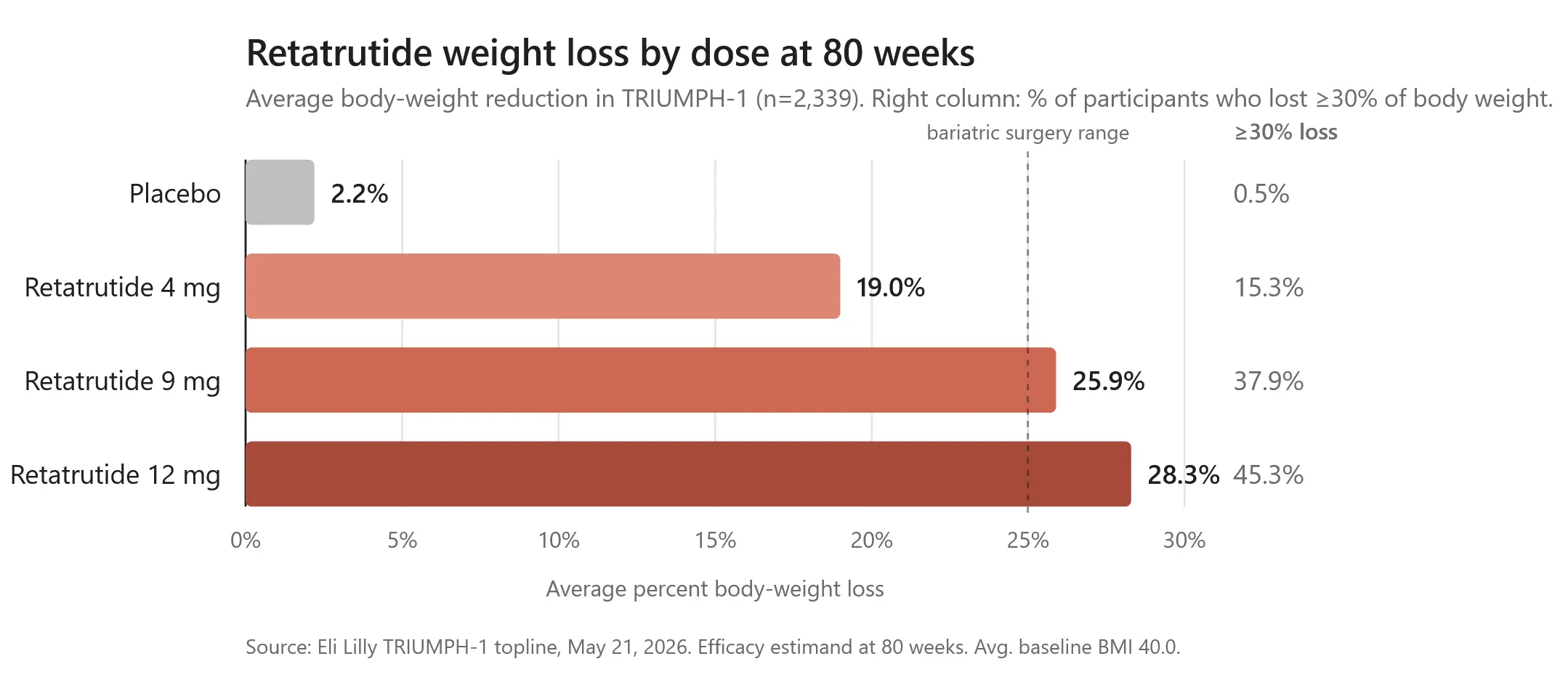
Large phase 3 studies (the TRIUMPH program) confirm these results:
- TRIUMPH-1 included 2,339 obese people without diabetes. Over 80 weeks, participants on 12 mg lost an average of 28.31 pounds of weight, compared with 2.21 pounds on placebo. Nearly 451 pounds of weight lost 301 pounds or more. [26].
- TRIUMPH-2 included 1,152 people with type 2 diabetes and obesity. Over 80 weeks, weight loss was up to 20.8%, versus 4.0% with placebo [28].
- TRIUMPH-3 included 1949 people with severe obesity and cardiovascular disease. Weight loss was up to 22.6% in 80 weeks [28].
- TRIUMPH-4 included 445 people with obesity and knee osteoarthritis. Over 68 weeks, participants on 12 mg lost an average of 28.71% of their weight and their knee pain decreased by about 74-761% [27].
The TRIUMPH results have so far been announced by the manufacturer and have not yet been fully published in peer-reviewed scientific journals. Therefore, they should be taken with a certain amount of caution.
Fatty liver disease (MASLD)
This is where the glucagon component seems to be particularly useful, because glucagon receptors are mainly in the liver.
In a substudy of 98 participants with fatty liver (over 10% of liver fat), retatrutide at a dose of 12 mg reduced liver fat by an average of 82.4% in just 24 weeks. There was virtually no change with placebo. About 86% of the 12 mg participants achieved normal liver fat levels (below 5%) [30].
Reducing liver fat is linked to weight loss, reducing belly fat, and improving insulin sensitivity. [30].
Type 2 diabetes
In a phase 2 study of 281 people with type 2 diabetes, retatrutide at a dose of 12 mg lowered HbA1c by 2.021% over 24 weeks. [31].
In the phase 3 TRANSCEND-T2D-1 study of 537 people with type 2 diabetes, retatrutide reduced HbA1c by up to 1.941% (vs. 0.811% with placebo) and weight by up to 15.31% over 40 weeks. [32]. This is the first phase 3 study with retatrutide to be published in full in a scientific journal.
Blood pressure and blood lipids
A meta-analysis of randomized trials showed that retatrutide reduced systolic blood pressure by an average of about 6.8 mmHg and diastolic blood pressure by about 2.5 mmHg. It also reduced total cholesterol, LDL cholesterol, and triglycerides, without changing HDL cholesterol. [33].
Side effects associated with Retatrutide
Retatrutide has side effects even under controlled conditions, with a quality-assured drug, slow dose increases, and medical supervision.
Most of them can be explained by its mechanism of action.
Gastrointestinal complaints
These are the most common side effects and are mainly due to the action on GLP-1 receptors. Delayed gastric emptying and the effect on the brainstem lead to nausea, vomiting, constipation or diarrhea.
In the TRIUMPH-1 study, the incidence at the 12 mg dose was [26]:
- Nausea – 42.4% (vs. 14.8% on placebo)
- Diarrhea – 32.0% (vs. 13.5%)
- Constipation – 26.1% (vs. 10.9%)
- Vomiting – 25.3% (vs. 4.8%)
These complaints are dose-dependent and are mostly mild to moderate. The phase 2 study shows that they can be partially reduced if treatment is started at a lower dose (2 mg instead of 4 mg) [25].
Treatment was discontinued due to adverse reactions in 11.31% of participants on 12 mg, compared to 4.91% on placebo. [26].
Rapid heartbeat
Retatrutide causes a dose-dependent increase in heart rate. The effect reaches a maximum around week 24 and then decreases. [25]. A similar effect was also observed with semaglutide and tirzepatide and is likely due to the direct action of GLP-1 on the heart. [12].
Dysesthesia
Dysesthesia is an unpleasant or altered sensation in the skin, such as tingling, burning, or pain when touched. In TRIUMPH-1, it was reported in about 121% of participants on 9 and 12 mg, compared to less than 11% on placebo. [26]. Complaints are mostly mild to moderate and most subside during treatment.
This side effect is not typical of older drugs in the group, and its mechanism has not yet been elucidated.
Pancreas and liver
In phase 2, one case of pancreatitis and several asymptomatic elevations of pancreatic enzymes were reported at the highest dose, as well as isolated hepatic adverse events. [25].
The number is small and does not allow for conclusions, but these are potential side effects that need to be further investigated.
How is retatrutide dosed in clinical trials?
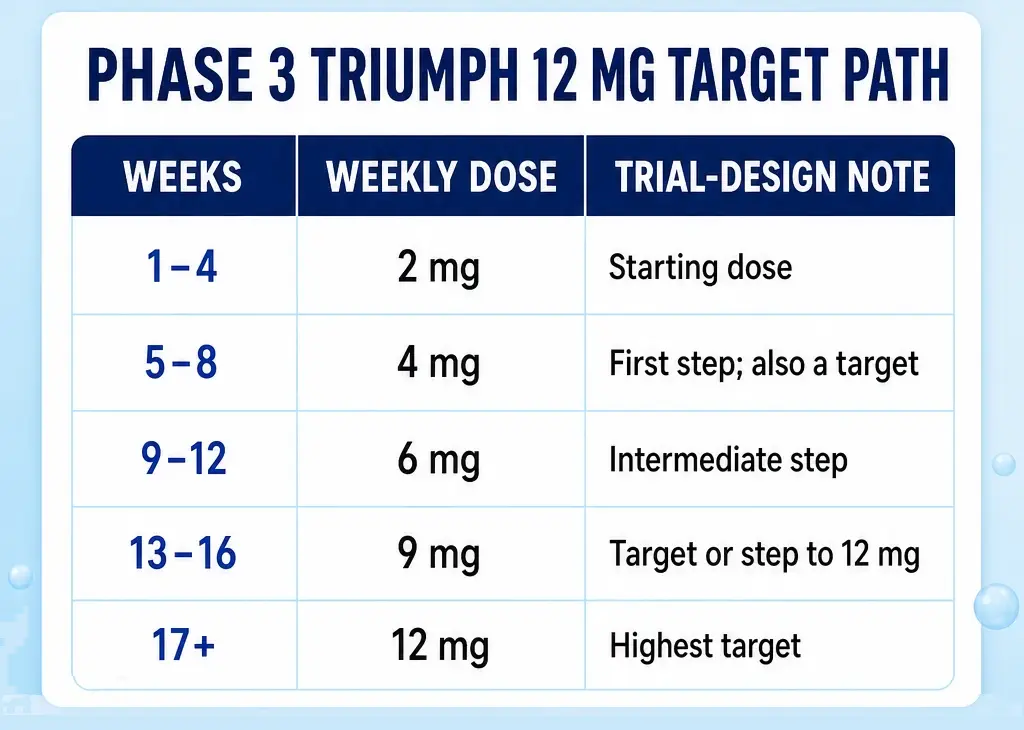
Retatrutide is given once weekly as a subcutaneous injection. In the phase 3 studies, treatment was started at 2 mg per week and the dose was gradually increased every 4 weeks, in the following steps: 2 mg → 4 mg → 6 mg → 9 mg → 12 mg [28].
Gradually increasing the dose gives the body time to get used to it and reduces gastrointestinal side effects.
This regimen is only used in clinical studies under medical supervision. It is not a recommendation for self-administration.
Is Retatrutide approved?
As of September 2026, retatrutide is NOT APPROVED for use by any regulatory agency in the world. [2].
Eli Lilly plans to submit an application for approval to the US FDA in the first quarter of 2027. [28]. There are no specific deadlines yet for the European Union and Bulgaria.
Retatrutide cannot be legally sold to patients. However, numerous products under that name are available online, often labeled „for research purposes only.“.
Eli Lilly reports over 14,000 websites, ads and listings illegally offering retratrutide in more than 100 countries [2].
Such products are of unknown origin and composition. It cannot be guaranteed that they contain retatrutide, in what dosage, or whether they are sterile. Their use poses serious health risks.
Opinions about Retatrutide – Is it effective and safe according to a doctor – specialist
Retatrutide is the first triple agonist that simultaneously activates GLP-1, GIP, and glucagon receptors.
GLP-1 and GIP reduce appetite and improve blood sugar control, and glucagon likely adds to greater energy expenditure and a marked reduction in liver fat.
The results of the studies so far are impressive. In terms of side effects, it seems that retatrutide has the same risks, but some of them are slightly more common.
However, retatrutide is still an experimental drug, and its safety in long-term use has yet to be evaluated.
As of 2026, retatrutide is NOT APPROVED for human use.
Patients who need medication support for weight loss are best directed to already approved medications such as Vegovi and Mundjaro, after consultation with a doctor.
– Dr. Dimitar Marinov, MD, physician, specialist in nutrition and dietetics
If you found this article helpful, feel free to follow me on social media for more evidence-based content.
