GLP-1 for Weight Loss - Effectiveness, Safety and Prices
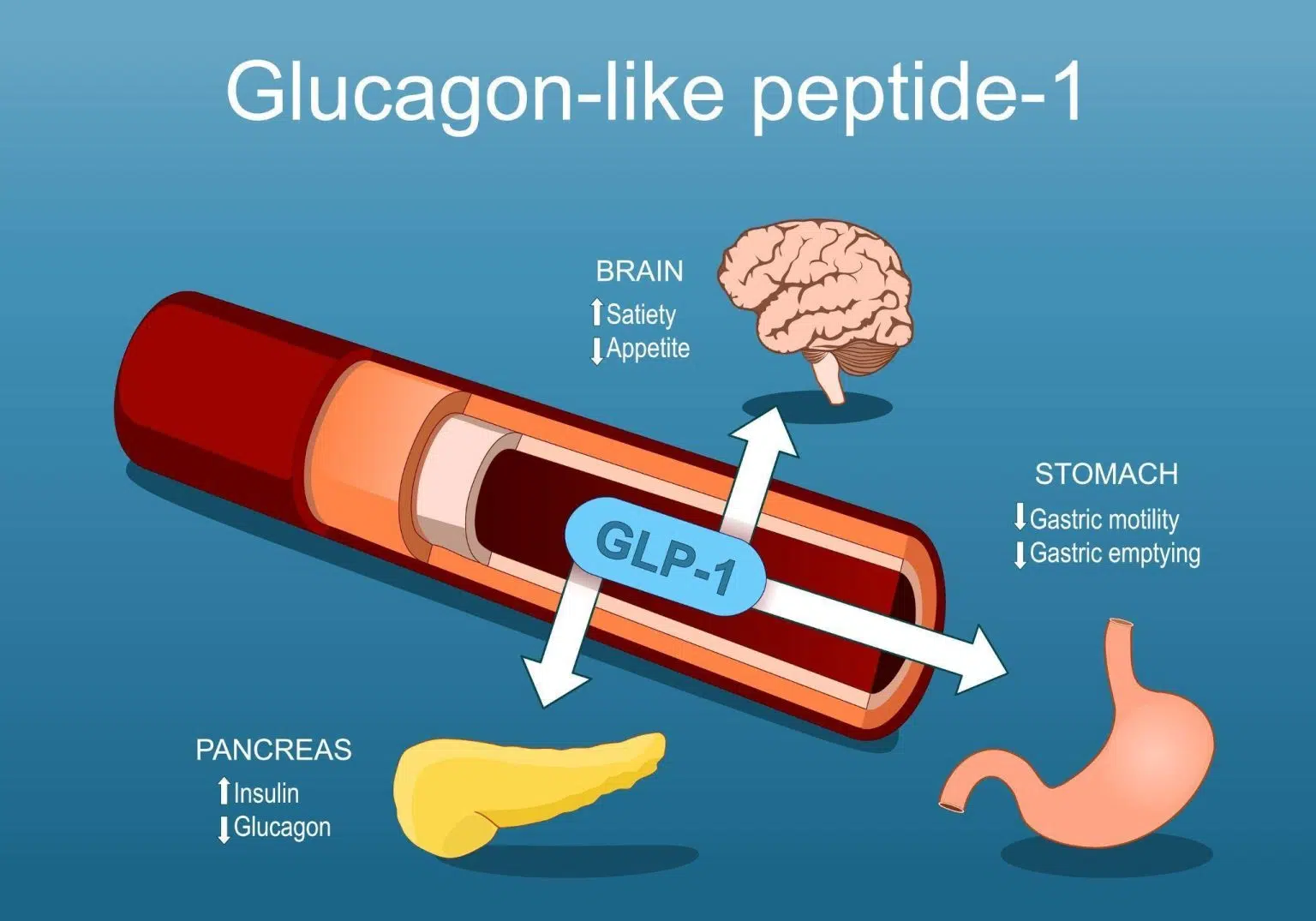
GLP-1 agonists are weight loss medications that help with overweight and obesity.
They reduce appetite and make it easier to feel full with less food, which usually leads to lower calorie intake.
Among the GLP-1 agonists already approved are semaglutide and tirzepatide. These are prescription drugs that are used as an adjunct to diet and exercise.
The choice of an appropriate preparation depends not only on the desired weight loss, but also on concomitant diseases, tolerability, and the need for long-term treatment.
Therefore, it is important to consult with experienced doctor and specialist, who can best guide you to the right choice.
What are GLP-1 agonists?
GLP-1 is an abbreviation for glucagon-like peptide-1. It is a natural hormone that is released from the intestines after meals and is involved in the regulation of blood sugar and appetite. It belongs to a group of hormones called incretins.
Drugs that activate its receptor are called GLP-1 receptor agonists, as well as incretin mimetics. [1],[2],[3].
The natural hormone acts only a few minutes after eating, while drug molecules are designed to retain their activity for days.
This is what allows for continued control over appetite, even though some of them are only applied once a week.
In everyday language, GLP-1 agonists are often used as a generic term, but there are important differences between the drugs:
- Semaglutide and liraglutide: activate the GLP-1 receptor. Liraglutide is found in Saxenda, and semaglutide in Vegavi. A more accurate definition is incretin agonists, since GLP-1 is an incretin hormone. [1],[4].
- Tirzepatide: activates both GLP-1 and GIP receptors, so it is more accurately defined as a dual incretin agonist. This is the active ingredient in Munjaro and Zepbound [2].
- Retatrutide: acts on GLP-1, GIP, and glucagon receptors. It is an experimental triple incretin agonist that is awaiting regulatory approval in 2027. [5],[6].
How do GLP-1s work for weight loss?
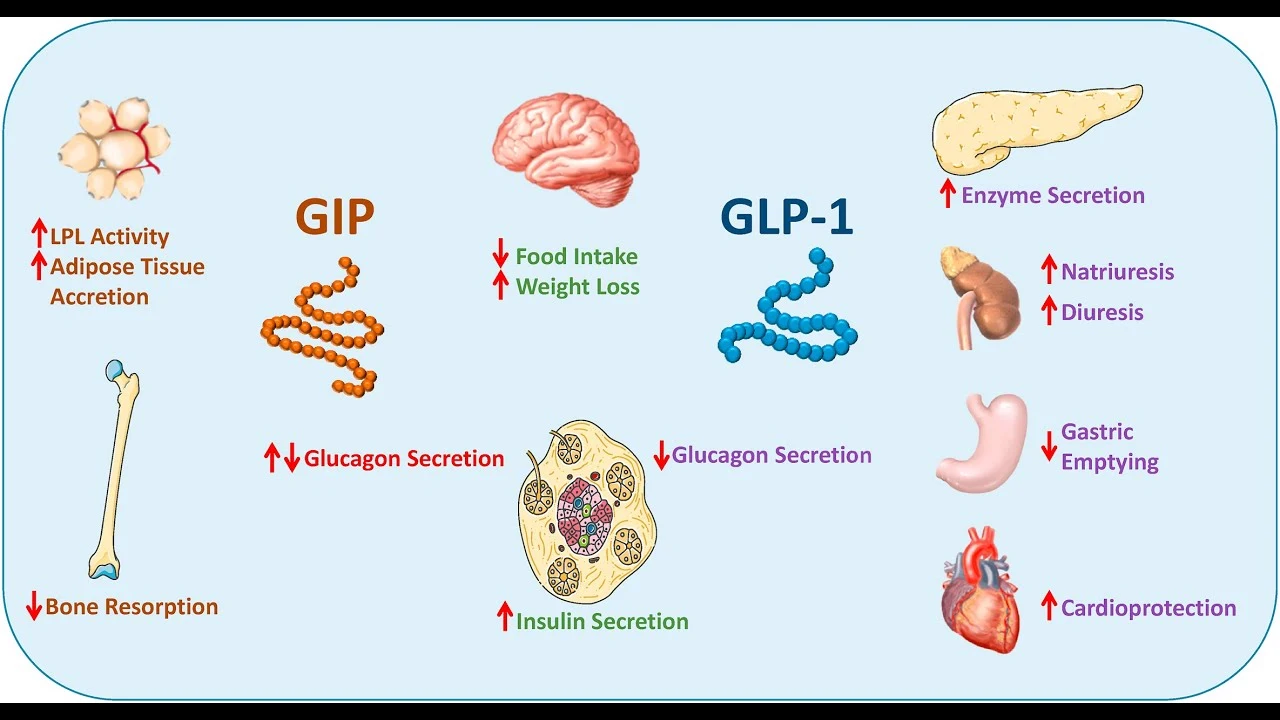
The main action of GLP-1 agonists is on receptors in the brain that regulate hunger and appetite centers. For many patients, this means less appetite, earlier satiety, lower calorie intake and easier adherence to the diet. [1],[2].
GLP-1 medications can also delay gastric emptying, which further facilitates satiety during meals, but this effect is not fundamental and most often weakens with prolonged use. Therefore, weight loss should not be explained solely by food retention in the stomach.
At the same time, GLP-1 promotes the release of insulin depending on blood sugar (BG) levels.
If BP is normal, as in people without diabetes, then the risk of hypoglycemia with monotherapy is low. However, in patients on insulin or certain diabetes medications, such as sulfonylureas, the combination requires special care. [1],[2].
These are not preparations that help burn fat regardless of diet. The main effect on weight is related to reduced energy intake.
Only for the still experimental molecule retatrutide is it believed that the additional effect of glucagon activation increases energy expenditure by about 10-15%, in parallel with appetite suppression. [1],[2],[5]. However, the main weight loss effect is again primarily due to appetite suppression.
Which GLP-1 injections are intended for weight loss?
The same active ingredient may be available under different trade names and with different indications [1],[7],[8]:
| GLP-1 medication | Active substance | Key distinction for patients |
| Saxenda | Liraglutide | GLP-1 agonist for weight control administered by daily subcutaneous injection [4]. |
| Veg | Semaglutide | GLP-1 agonist for weight control; injectable form administered once weekly [1]. |
| Ozempic and Rebelsus | Semaglutide | Products for the treatment of type 2 diabetes in the EU, respectively as an injection and tablets [7],[8]. |
| Mounjaro | Tirzepatide | Dual GIP/GLP-1 agonist approved in the EU for type 2 diabetes and weight control under appropriate criteria; administered once weekly [2]. |
| (not yet approved) | Retatrutid | Triple agonist under investigation without approval for routine use. Trial results do not make research peptides sold online approved drugs [6]. |
Are there GLP-1 weight loss pills?
Yes, the current European product information for Vegovi now includes tablets for weight control in adults, with a maintenance dose of 25 mg once daily. [1].
In the OASIS 4 study in 307 adults without diabetes, oral semaglutide 25 mg resulted in an average of 13.6% weight loss over 64 weeks, versus 2.2% with placebo [9].
The often cited 16.6% results from a different statistical estimate that models the outcome when continuing the assigned treatment, rather than from the main analysis regardless of its interruption. [1].
The tablets have specific rules for taking on an empty stomach, with no more than 100 ml of water and at least 30 minutes before food, drinks and other medications. [1]. Otherwise, the peptide will not be well absorbed.
Who are GLP-1 injections suitable for?
In adults, the usual European criteria for weight treatment with Vegovi or Mundjaro are: [1],[2],[4]:
- Obesity: body mass index (BMI) of 30 kg/m² or more.
- Overweight (BMI of at least 27 kg/m²) plus a weight-related disease, such as hypertension, dyslipidemia, obstructive sleep apnea, or type 2 diabetes.
A person does not need to have diabetes to receive treatment for obesity. However, it is necessary to meet the indications for the specific product, and the therapy must be combined with a diet and exercise regimen.
These are not standard means of losing a few pounds at normal weight.
Separate indications and criteria apply to children and adolescents, which cannot be replaced by the specified thresholds for adults.
How much weight do you lose with GLP-1 agonists?
Results depend on the preparation, dose, duration, and patient characteristics.
This table shows average reduction in starting weight in key studies, but results vary significantly at the individual level:
| Treatment and research | Duration | Average weight loss with the medication | Average weight loss with placebo |
| Liraglutide 3 mg daily, SCALE [10]. | 56 weeks | 8.0%, according to the product information. | 2.6%, according to the product information. |
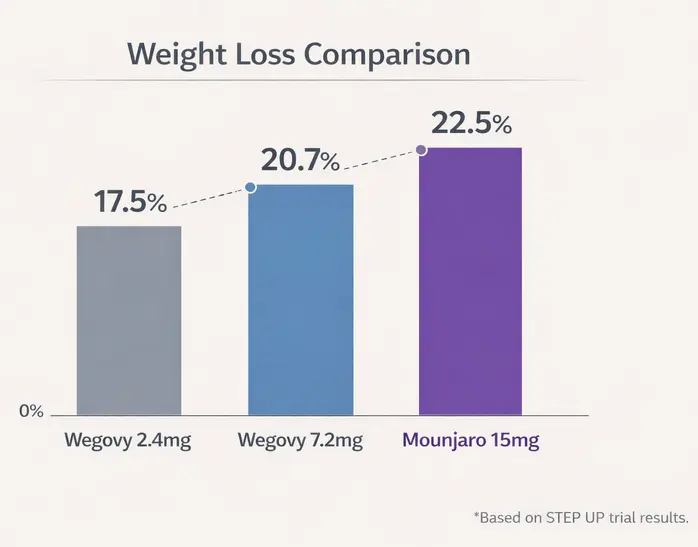
| Semaglutide 2.4 mg weekly, STEP 1 [11]. | 68 weeks | 14.9%; 17.5% in all others on therapy for at least 72 weeks. | 2,4%. |
| Semaglutide 7.2 mg weekly, STEP UP [12]. | 72 weeks | 18.7%; 20.7% in all others on therapy for at least 72 weeks; in the same study 2.4 mg resulted in 15.6%. | 3,9%. |
| Tirzepatide 5, 10 or 15 mg weekly, SURMOUNT-1 [13]. | 72 weeks | 15.0%, 19.5% and 20.9% respectively; 22.5% for all others on 15mg/week therapy for at least 72 weeks; | 3,1%. |
The percentages in the table indicate the total weight loss in the respective group, not the additional effect compared to placebo.
Furthermore, comparing different studies has limitations because the participants, duration, and analysis methods are not identical. [10],[11],[13].
For STEP 1, STEP UP and SURMOUNT-1, the lower values also account for outcomes prior to premature discontinuation of treatment in some patients.
These numbers describe study groups without diabetes and should not automatically be extrapolated to patients with type 2 diabetes. [11],[12],[13]. Unfortunately, patients with T2DM appear to lose less fat on average during GLP-1 therapy for weight loss.
Munjaro or Vegovi: which is more effective?
More reliable than comparing individual trials is the result of the head-to-head study SURMOUNT-5. It compared maximally tolerated doses of tirzepatide 10 or 15 mg per week with semaglutide 1.7 or 2.4 mg per week in 751 adults with obesity but no diabetes.
Over 72 weeks, the average weight reduction was 20.2% with tirzepatide versus 13.7% with semaglutide [14].
This supports the higher average efficacy of tirzepatide at the specific doses studied, but It is NOT a comparison with semaglutide 7.2 mg and does not mean that it is best suited for every patient.
What does the data show about retatrutide?
In phase 2, retatrutide 12 mg weekly resulted in a mean weight reduction of 24.2% over 48 weeks, versus 2.1% with placebo.
In 2026, the manufacturer Eli Lilly also reported a mean reduction of 28.3% with a dose of 12 mg/week for 80 weeks in the phase 3 TRIUMPH-1 study. [15].
This is a result of controlled clinical trial conditions, not evidence of the quality or safety of products sold online under the same name. [5],[6].
Do GLP-1 injections have benefits beyond weight loss?
Some drugs have proven benefits in specific diseases and patient groups. It is important not to equate a clinical trial result with a single regulatory indication or to automatically transfer the benefit to all drugs:
- Cardiovascular risk: in SELECT semaglutide 2.4 mg was studied in 17,604 people with established cardiovascular disease and overweight or obesity, without diabetes. Cardiovascular death, nonfatal heart attack, or nonfatal stroke occurred in 6.51% of patients with 30 [16].
- Obstructive sleep apnea: SURMOUNT-OSA studies show that tirzepatide can significantly reduce the number of breathing disorders during sleep in people with obesity and moderate to severe apnea [17].
- Steatohepatitis: ESSENCE with semaglutide and SYNERGY-NASH with tirzepatide show improvement in histological parameters in metabolic-associated steatohepatitis (MASH). However, improvement in liver biopsy does not equate to proven prevention of all long-term liver complications [18],[19].
How do you start treatment with GLP-1 injections for weight loss?
Doses are increased gradually to improve tolerability. The starting dose is usually not the one with which the maximum effect on weight is assessed. [1],[2],[4].
- Saxenda: start with 0.6 mg daily, gradually increasing at intervals of at least one week to a maintenance dose of 3 mg daily in adults [4].
- Veg, injectable form: start with 0.25 mg once a week, usually in successive four-week increments up to 2.4 mg. [1].
- Mounjaro: start with 2.5 mg per week for four weeks, then increase to 5 mg; if necessary, follow with 2.5 mg steps after at least four weeks of the current dose, up to a maximum of 15 mg per week in adults [2].
Vegovi also includes the option of increasing to 7.2 mg per week in certain adults with a BMI of at least 30 kg/m² at the start of treatment, after a minimum of four weeks at 2.4 mg. This does not mean that every patient should reach this level. [1].
In case of severe adverse reactions, the doctor may postpone the increase or change the therapy instead of mechanically increasing the dose. [1],[2].
Two GLP-1 preparations should not be combined independently or another product with the same active substance should be added. [1],[4].
What are the risks and side effects of GLP-1 agonists?
The most common complaints are from the digestive system:
- nausea and rarely – single vomiting;
- diarrhea or constipation;
- abdominal discomfort.
These complaints are usually more pronounced at the beginning of therapy and when the dose is increased, but in some patients they require a change or discontinuation of treatment.
Less common problems that require prompt medical evaluation [1],[2],[4]:
- Prolonged vomiting or diarrhea: can lead to dehydration and deterioration of kidney function, especially in vulnerable patients.
- Severe, constant abdominal pain: especially if it spreads to the back, it may be a symptom of pancreatitis and should not be taken as a normal malaise from the injection.
- Pain under the right rib, fever or jaundice: require evaluation for biliary complications. Gallstones and cholecystitis have been described among the adverse reactions.
- Sudden loss or rapid deterioration of vision: require urgent medical evaluation. EMA identifies non-arteritic anterior ischemic optic neuropathy (NAION) as a very rare side effect of semaglutide, which may affect up to 1 in 10,000 people treated [20].
- Facial swelling or difficulty breathing: may be signs of a severe allergic reaction and require emergency care.
When is extra caution needed?
Before starting, the doctor should know about past pancreatitis, biliary diseases, severe problems with gastric emptying, diabetic retinopathy, and all medications taken.
These conditions are not absolute contraindications, but require increased vigilance during therapy. [1],[2].
The medicines not used for weight loss during pregnancy. When planning a pregnancy, semaglutide is stopped at least two months in advance, and tirzepatide at least one month in advance.
When breastfeeding, Vegovi should not be used until the current European information on Mundjaro allows for discussion of use after individual medical judgment.
It is also important to notify the anesthesiologist before surgery or a procedure with deep sedation, as delayed gastric emptying may increase the risk of aspiration. [1],[2].
Does weight come back after stopping a GLP-1 agonist?
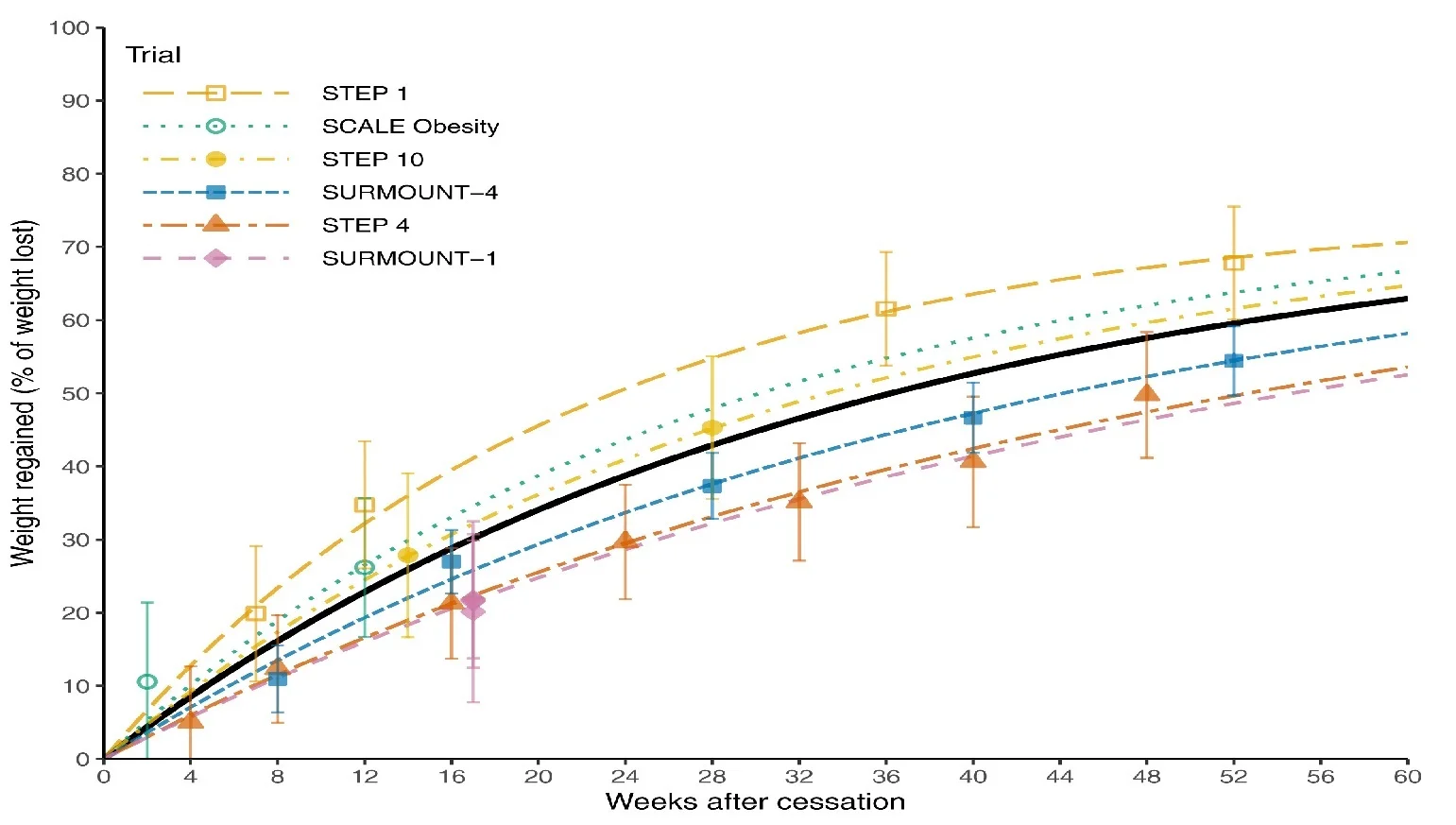
Many patients experience weight gain after stopping treatment. Therefore, obesity therapy should not automatically be viewed as a short course after which the result is necessarily maintained without additional measures.
In the STEP 1 follow-up, the monitored subgroup regained an average of about two-thirds of the weight lost within a year after stopping semaglutide. It is important to note that the combination of diet + regular physical activity was also discontinued along with the medication. [21].
SURMOUNT-4 showed a similar trend with tirzepatide. Specifically, after an initial weight loss of 20.9% over the first 36 weeks, some participants switched to placebo and gained an average of 14.0% over the next 52 weeks, while those who continued treatment lost an additional 5.5% [22].
This does not mean that every patient will gain all the weight back. But at the beginning of any GLP-1 therapy, it is necessary a structured plan from a nutritionist to optimize effectiveness and subsequently maintain the achieved results.
How to eat and maintain muscle mass during therapy with GLP-1 agonists?
With any significant weight loss, not only fat is lost, but also part of the lean body mass.
This lean body mass includes skeletal muscle, but also water, other tissues, and even fat that may have been located inside the skeletal muscle, for example in patients with IR.
Reduced appetite makes physical activity, but also the quality of nutrition, particularly important. Practical priorities are [23]:
- Strength exercises: regular resistance training according to the patient's abilities, rather than relying solely on more walking or protein supplementation.
- Enough protein: including an appropriate protein source in main meals, with needs determined individually according to age, body composition, activity and kidney function.
- Complete nutrition: a variety of vegetables, fruits, legumes and other food sources of fiber and micronutrients, according to tolerance.
- Enough fluids: especially for gastrointestinal complaints, but with individual consideration for diseases that require limiting intake.
- Tracking beyond the scale: assessment of waist, other circumferences and especially physical function through the 30STS and 5STS tests.
The 30-second sit-to-stand test (30STS) measures the muscular endurance of the lower extremities. The norms are:
| Age | Men | Women |
| 19–35 years old (young adults) | ~33 (average) | ~33 (average) |
| 60–64 | 14–19 | 12–17 |
| 65–69 | 12–18 | 11–16 |
| 70–74 | 12–17 | 10–15 |
| 75–79 | 11–17 | 10–15 |
| 80–84 | 10–15 | 9–14 |
| 85–89 | 8–14 | 8–13 |
| 90–94 | 7–12 | 4–11 |
The 5-Sit-Stand Test (5STS) measures lower limb strength and balance by determining how quickly a person can complete 5 full sit-ups and stand-ups. The standards are:
| Age | Average time |
| 14–19 years old. | 6.5 ± 1.2 sec |
| 20–29 years old. | 6.0 ± 1.4 sec |
| 40–49 years old. | 7.6 ± 1.8 sec |
| 60–69 AD. | 7.8–11.4 sec |
| 70–79 AD. | 9.3–12.6 sec |
| 80–89 AD. | 10.8–14.8 sec |
The standard protocol requires the arms to be crossed over the chest (palms placed on opposite shoulders) for both tests.
These measures help preserve muscle function and improve nutritional status, but do not guarantee complete prevention of lean mass loss. The best approach is for GLP-1 medication to be part of a comprehensive treatment program and monitored by a experienced doctor and specialist.
What are the prices of GLP-1 agonists in Bulgaria?
As of 2026, prices for the two main GLP-1 agonists for weight loss in Bulgaria range from €150 per month to over €450 per month.
Specifically, the prices for the available 4-dose Vegovi pens are:
- Veg 0.25 mg/week ~170 €
- Veg 0.5 mg/week ~170 €
- Veg 1 mg/week ~170 €
- Veg 1.7 mg/week ~195 €
- Veg 2.4 mg/week ~225 €
The prices for the different 4-dose Munjaro pens are:
- Munjaro 2.5 mg/week ~200 €
- Munjaro 5 mg/week ~270 €
- Mundjaro 7.5 mg/week ~380 €
- Munjaro 10 mg/week ~380 €
- Munjaro 12.5 mg/week ~475 €
- Munjaro 15 mg/week ~475 €
GLP-1 for weight loss – opinion of a doctor, specialist
From a clinical practice perspective, GLP-1 and dual incretin agonists are one of the most significant changes in obesity treatment in the last decade.
But they do not replace the basics of good medical care.
The choice of molecule, dose, and duration of therapy should be based on the individual patient, including comorbidities, tolerance of side effects, realistic expectations for outcome, and long-term adherence to treatment, including financial options.
My personal observation when working with patients is that the best and most lasting results are achieved by those who combine the medication with a structured diet plan and regular physical activity, not those who rely solely on the injection!
– Dr. Dimitar Marinov, MD.
If you found this article helpful, feel free to follow me on social media for more evidence-based content.
