Retatrutide for Weight Loss - The Complete Guide
Retatrutide is a new weight loss peptide that works by a mechanism similar to those already gaining popularity in our country. Veg and Mounjaro.
Unlike them, however, it is still being tested and has not been approved for use. However, retatrutide has gained considerable popularity due to its high effectiveness according to preliminary data.
As of 2026, retatrutide is being tested for:
- Weight loss for overweight and obesity – according to some data, it leads to a weight reduction of about 25% (a quarter of the initial weight)!
- Reduction of visceral (abdominal) fat and fatty liver
- Disease control in diabetics (type 2 diabetes)
But retatrutide is an unapproved, experimental peptide from Eli Lilly, whose production and sale outside of clinical trials is illegal and poses serious health risks.
Illegal products offered online are of uncontrolled origin, are often counterfeit or contaminated, and their use is extremely dangerous.
If you think you need weight loss medication, be sure to consult a qualified doctor, who can prescribe you approved and safe medications for the purpose.
What is Retatrutide?
Retatrutide is an artificially created peptide developed by Eli Lilly in 2019 under the code name LY3437943 [1].
It belongs to a group of substances called incretin mimetics – these are medicines that mimic the action of natural hormones in the body called incretins. [2], [3].
Incretins, such as GLP-1 and GIP, are hormones that are released in the gut after eating and help the body produce more insulin when blood sugar levels rise.
They also reduce appetite and delay stomach emptying, leading to a longer feeling of satiety. [4].
They are well known GLP-1 agonist semaglutite, and tirzepatide, which mimics both GLP-1 and GIP.
Retatrutide is different from most similar drugs because it acts simultaneously on three types of receptors – for GLP-1, GIP and glucagon (GCG) [5].
It is believed that by activating glucagon receptors, it can further speed up metabolism and help with more effective weight loss.
What patients should know about retatrutide
Here are the most important facts about the medication:
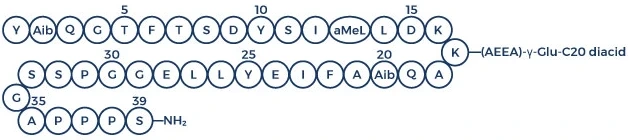
- Retatrutide is a peptide composed of 39 amino acids. It was created based on the structure of the natural hormone GIP. For this reason, it most strongly activates GIP receptors. But it has been further modified so that it also effectively acts on two other types of receptors – GLP-1 and glucagon, which gives it a triple effect [6].
- The molecule has an extended half-life – it remains active in the body for several days. This is due to a special C20 fatty acid addition in the structure, which increases its stability and allows for administration only once a week, instead of every day. [7].
- The first clinical trials (phases 1b and 2) show very good results – the drug has a favorable safety profile, good stability in the body and significant effectiveness in terms of weight loss and improved blood sugar control. [5], [6], [8], [9], [10].
- Retatrutide is currently undergoing Phase 3 clinical evaluation as part of Eli Lilly's TRIUMPH program. This series of studies focuses on its safety and efficacy in the treatment of obesity in individuals with and without type 2 diabetes. [5].
Advantages of Retatrutide over other GLP-1 agonists
Retatrutide has a unique triple action and simultaneously stimulates three different receptors – GLP-1R, GIPR and GCGR. Here is the meaning of each of them:
- GIPR is found in the pancreas, adipose tissue, brain, etc. In the pancreas, it increases insulin secretion, but only when blood sugar levels are high – avoiding the risk of hypoglycemia. GIPR also plays an important role in appetite control, as it affects the satiety centers in the brain. According to some small studies, GIPR may also increase energy expenditure in adipose tissue, as well as stimulate fat redistribution to improve insulin sensitivity. [11].
- GLP-1R is found in the pancreas, heart, brain, etc. In the pancreas, it has the same role as GIPR. In the brain, GLP-1R suppresses both appetite and cravings for certain foods, and activation along with GIPR enhances these effects. In addition, activation of GLP-1R temporarily delays gastric emptying, which further promotes feelings of satiety. There are also proven benefits for the heart, with some GLP-1R agonists reducing the risk of heart attack and stroke by over 20% [12], [13].
- GCGR is found in adipose tissue, liver, etc. In the liver, it stimulates glucose production to prevent hypoglycemia. In beige adipose tissue, it increases energy expenditure by stimulating fat breakdown and activating thermogenesis – the process of burning calories to produce heat. Beige adipose tissue is a special type that has properties of both „white“ and „brown“ adipose tissue. It is found in ordinary fat depots and can be formed from white fat cells under certain stimuli, but burns energy similar to brown fat, thus can increase calorie burning [14].
It is believed that the combined action of the three receptors – GLP-1R, GIPR and GCGR – not only leads to lower calorie intake and higher energy expenditure, but also to increased insulin sensitivity. [2].
Is Retatrutide Approved for Weight Loss and Use by 2026?
Retartrutide is NOT yet approved for weight loss and treatment of obesity or type 2 diabetes.
By 2026, there will be officially published results from phase 2 studies, as well as preliminary data from recently completed large phase 3 studies.
Specifically, we are talking about the phase 3 studies from the TRIUMPH clinical program. Based on their results, the approval of retatrutide is awaited. in 2027 by the FDA.
Retatrutide for overweight and obesity
The research available to date shows that retatrutide may be the most powerful weight loss medication to date.
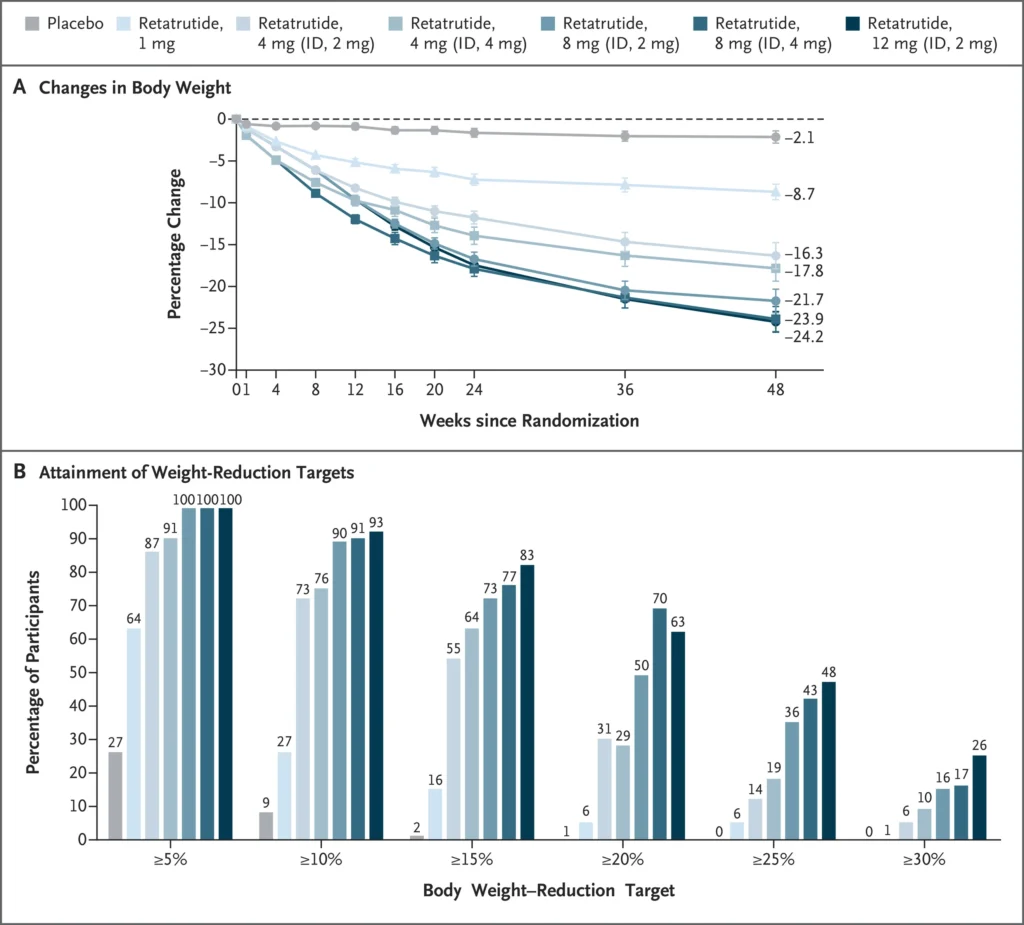
The first signals of this came back in 2023 from a clinical trial (phase 2), which lasted only 48 weeks and included 338 adults without diabetes, but who were overweight (BMI over 27) or obese (BMI over 30). [8]. Here are the data from it:
- Doses ranged from 1 mg to 12 mg per week.
- Even the lowest dose of 1 mg/week resulted in an average weight loss of 8.7%, while in the placebo group the reduction was only 2.1%.
- At the highest dose (12 mg/week), participants lost an average of 24,2% from its original weight.
- 100% of all patients lost at least 5%, which is a clinically significant weight loss. Weight loss of more than 5% is usually sufficient to improve the parameters of the underlying disease. insulin resistance.
Significant improvements were reported, such as smaller waist circumference, lower blood pressure, reduced glycated hemoglobin (HbA1c), better fasting blood sugar and insulin levels, and reduced cholesterol.
Results from TRIUMPH (phase 3 studies)
The TRIUMPH program includes 4 studies, all of which have already reported results.
The results have not yet been published in independent scientific journals, but publicly available data is available, coming from press releases from the manufacturer Eli Lilly itself.
It is important to take the results with a certain amount of caution until they are confirmed through a full, peer-reviewed analysis in a scientific journal:
- TRIUMPH-1 is the largest of the four studies and includes 2339 participants with obesity but without T2DM and lasts 80 weeks. According to results announced on May 21, 2026., participants on the highest dose of 12 mg per week lost an average of 28.31 pounds of body weight, compared with only 2.21 pounds on placebo. Nearly 451 pounds of these achieved a weight loss of 301 pounds or more. With extended follow-up of up to 104 weeks, the average loss reached 30.31 pounds, but it is important to note that this study only included people who had a BMI >35 at baseline. [15].
- TRIUMPH-2 studied the effect of retatrutide in patients with T2DM who were also overweight or obese, over a period of 80 weeks. According to the press release of July 23, 2026., the study showed dose-dependent weight loss of 12.7% at 4 mg, 19.1% at 9 mg and 20.8% at the maximum dose of 12 mg per week, accompanied by a decrease in glycated hemoglobin (HbA1c) to -1.6% [16].
- TRIUMPH-3 is aimed at severely obese patients who already have established cardiovascular disease (history of heart attack, stroke or peripheral arterial disease). According to the same message from July 23, 2026., participants achieved an average weight loss of up to 22.6% (about 25.8 kg) in 80 weeks [16].
- TRIUMPH-4 is a stand-alone study targeting only obese or overweight patients with knee osteoarthritis (without diabetes), with a duration of 68 weeks and 445 participants (NCT05931367). Results announced on December 11, 2025, showed a mean weight loss of 28.7% at a dose of 12 mg/week (26.4% at 9 mg), compared to only 2.1% with placebo. Knee pain, as measured by the WOMAC scale, decreased by up to 75.8% (at 9 mg) and 74.3% (at 12 mg), while the reduction with placebo was 40.3%. Nearly 39.41% of participants on the highest dose achieved a weight loss of 301% or more, and 121% reported complete pain relief by week 68. Systolic blood pressure was also reduced by up to 14 mmHg. The rate of discontinuation due to adverse events was 18.21% on 12 mg, compared with 41% on placebo. [17].
Separately from the TRIUMPH program itself, a separate study on type 2 diabetes called TRANSCEND-T2D-1 has been completed, the results of which have now been published in an independent scientific journal.
Data at the highest doses showed significant reductions in weight (mean -15.3%), and HbA1c (by about -2%) [18].
| Dose | HbA1c | Weight change |
|---|---|---|
| Placebo | −0.81% | −2.6% |
| 4 mg | −1.69% | −11.5% |
| 9 mg | −1.86% | −13.9% |
| 12 mg | −1.94% | −15.3% |
Based on the results of TRIUMPH, ANDLai Lily announced on July 23, 2026., that they plan to submit an application to the FDA in the first quarter of 2027, with potential regulatory approval by the end of 2027.
Retatrutide for fatty liver and steatosis (MASLD / MASH)
Detailed data on the results of the phase 3 trials are currently not available.
But additional analyses of the aforementioned 48-week phase 2 study of 338 people revealed that beyond weight loss, retatrutide has additional benefits for fatty liver in patients with insulin resistance, metabolic syndrome, and prediabetes. [19].
Specifically, 98 of the participants had fatty liver disease (MASLD) or steatohepatitis (MASH).
They were found to have more than 101% of their liver tissue as fatty. The average weight of these participants was 110.2 kg and the average body mass index (BMI) was 38.4 kg/m².
The researchers monitored the change in liver fat using nuclear magnetic resonance (NMR) at 24 and 48 weeks of treatment.
They also measured body weight, the amount of abdominal fat, and various metabolic indicators related to insulin sensitivity and fat metabolism.
Biomarkers related to liver health and fibrosis were also examined, including ALT, AST, FIB-4, ELF, K-18, and pro-C3 – indicators that provide information about the degree of damage and inflammation in the liver.
Here's what the researchers report [19]:
- At the highest dose of 12 mg per week, participants showed an average reduction in liver fat of 82.41% in just 24 weeks, while people on placebo (i.e., an inactive substance) saw no change.
- 86% of the participants taking the maximum dose achieved completely normal levels of fat in the liver – below 5%, meaning that the fat accumulation almost disappeared.
- At high doses, researchers also reported significant improvements in metabolic markers – lower levels of fasting insulin, C-peptide, and triglycerides, as well as increases in adiponectin (a hormone that improves fat metabolism) and insulin sensitivity.
- Furthermore, the reduction in liver fat was closely associated with overall weight loss, reduction in abdominal fat (visceral fat), and improvement in insulin sensitivity – indicating that all of these changes occur simultaneously and are mutually supportive.
Retatrutide in type 2 diabetes
Two studies were conducted in patients with type 2 diabetes (T2D). The first (phase 1b) was a 12-week study in 72 diabetics [9].
According to the data, retatrutide (12 mg/week) significantly reduced HbA1c to -1.6% and participants lost an average of -8.96 kg.
Additionally, retatrutide can significantly delay gastric emptying, which also contributes to better glycemic control by delaying carbohydrate absorption. [20].
The second trial (Phase 2) was significantly larger, conducted over 36 weeks with 281 patients with T2DM. [10]. The key results are:
- Participants received up to 12 mg/week and experienced significant reductions in HbA1c levels of up to -2.02% (22.07 mmol/mol) at week 24 and -2.16% (23.59 mmol/mol) at week 36 compared to baseline. No improvement was seen in the placebo group.
- Additionally, 12 mg/week of retatrutide improved lipid profiles, including reductions in triglycerides and LDL cholesterol compared to baseline and placebo.
- Dose-dependent weight loss, with the highest dose group (12 mg/week) losing -17% of their initial body weight within 36 weeks, compared to -3% reduction in the placebo group.
Risks and side effects of retatrutide
According to data from the first clinical trials (phase 1 and phase 2), retatrutide has a similar safety profile and similar side effects as older drugs from the same group containing semaglutide and tirzepatide.
In one of the phase II studies, where retatrutide was compared to the well-known drug dulaglutide (Trulicity), it was found that after 36 weeks of treatment with a dose of 12 mg per week, 76% of the participants experienced any side effects.
In comparison, side effects were observed with dulaglutide in humans, with 67%. However, the incidence of serious adverse events was similar and no new risks associated with the triple action of retatrutide were identified. [10].
Overall, the scientists concluded that retatrutide appears safe and does not show additional dangers compared to other drugs of the same type.
Common side effects of Retatrutide
The largest published study of retatrutide (the aforementioned phase 2 with 338 subjects) revealed that the most common side effects were gastrointestinal problems, with their incidence being dose-dependent. [8].
They are most common at the highest dose of 12mg/week. Specifically, the 62 participants receiving the maximum dose reported the following complaints:
- Nausea – 28 participants (45%)
- Vomiting – 12 (19%)
- Constipation – 10 (16%)
- Diarrhea – 9 (15%)
- Allergic reactions and hypersensitivity – 8 (13%)
- Cardiac arrhythmia – 7 (11%)
- Fatigue – 6 (10%)
- Elevated lipase levels – 5 (8%)
- Injection site reactions – 5 (8%)
The overall incidence of discontinuation due to side effects was 161% in the subgroup receiving the maximum dose of 12 mg/week.
In comparison, at the lowest dose (1 mg/week) dropout was only 61%, while there were no discontinuations in the placebo group.
A dose-dependent increase in heart rate was observed, reaching a peak at week 24 and decreasing thereafter. Similar responses were also observed with semaglutide and tirzepatide. [8].
Serious side effects of Retatrutide
In the same phase 2 study, the incidence of serious adverse events was 41% in both the retatrutide and placebo groups. [8].
In the group with the highest dose of 12 mg/week of retatrutide, the serious complaints were:
- Liver problem – 2 participants
- Pancreatitis – 1 participant
In addition to the case of pancreatitis, there have been several patients with elevated amylase and lipase levels but no symptoms.
There were no cases of depression or other mental disorders in any of the treatment groups.
Is Retatrutide safe?
Retratutide has not yet been studied in large-scale studies, and while it appears to be extremely effective, its safety has not been fully understood.
Data collected from existing phase 1 and phase 2 studies show that the peptide is generally well tolerated. Its side effects are the same as those of tirzepatide and semaglutide. [8], [10], [12].
Retatrutide is currently in clinical development as part of the TRIUMPH program, which will provide comprehensive information to support its approval for medical use. [5].
Currently, patients who are overweight or obese and need medication to support treatment are best directed to already approved drugs for this purpose, such as semaglutide and tirzepatide.
How is Retatrutide dosed in clinical trials?
Retatrutide's long half-life allows for once-weekly dosing. In clinical trials, Retatrutide is typically started at a low dose of 1 mg/week and the dose is increased in the absence of side effects, every 4 weeks.
This approach is implemented to reduce the risk of adverse reactions, particularly gastrointestinal disorders, which are often associated with peptide therapies.
The dose may be increased every four weeks, allowing sufficient time for patient adaptation and monitoring for potential adverse reactions. The maximum recommended dose within this titration is 12 mg/week, which should be reached over a minimum period of 17 weeks. [10].
In terms of study duration, current clinical trials with Retatrutide have lasted up to 48 weeks. [8], [19].
It is important to note that faster titration than the described schedule is not recommended due to the increased risk of side effects. However, the titration process can be adjusted to a slower pace based on the individual patient's response and tolerability.
- Starting dose: Studies began administering Retatrutide at a dose of 1 mg/week for the first four weeks of the study period.
- Dose escalation: weeks 5-8 – 2 mg/week; weeks 9-12 – 4 mg/week; weeks 13-16 – 8 mg/week; week 17 and thereafter – 12 mg/week.
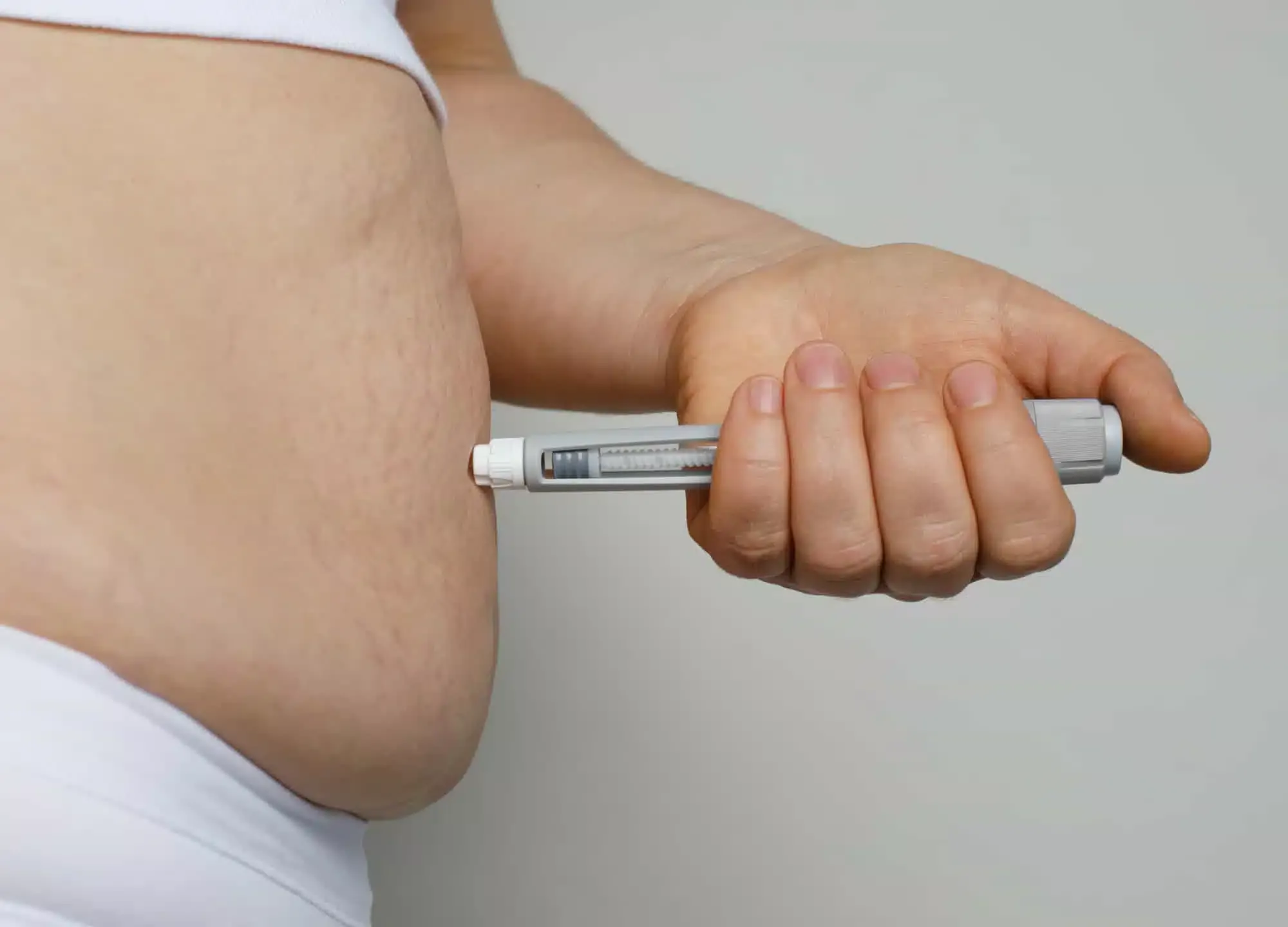
- Frequency: Injections are given once a week subcutaneously, usually in the abdominal area, at least 5 cm from the navel.
- Study duration: As of 2025, published studies are up to 48 weeks in duration.
Longer-term studies are underway, with some expected to last up to 113 weeks. The results of these longer-term studies are expected to be published in 2026, providing a more complete understanding of the long-term effects of Retatrutide.
Is Retatrutide Legal – Expert Doctor's Opinion?
Retatrutide is a peptide owned and patented by the American company Eli Lilly. Only they have the right to use it, and only in the context of clinical trials, as although its approval is expected soon, it is still unapproved.
No one is allowed to freely manufacture and sell Retatrutide because it has not been approved as safe and effective.
The sale and use of Retatrutide can lead to legal consequences, and its improper use can lead to significant health risks.
In August 2026, it became known that Eli Lilly had filed six lawsuits against medical spas, a compounding pharmacy, and other suppliers accused of selling counterfeit or unapproved retratrutide marketed for weight loss.
Patients should be very cautious of any products labeled Retatrutide that may be offered online by influencers and websites.
Such substances have an unclear origin and composition, and the label „99.9% Retatrutide“ most often does not correspond to the actual content. The reason is that the content is not controlled by any official institution.
Any claim that such illegal mixtures are laboratory tested cannot be verified, as laboratories are never truly independent.
Even if they contain the peptide, such products are often contaminated with impurities that are hazardous to health.