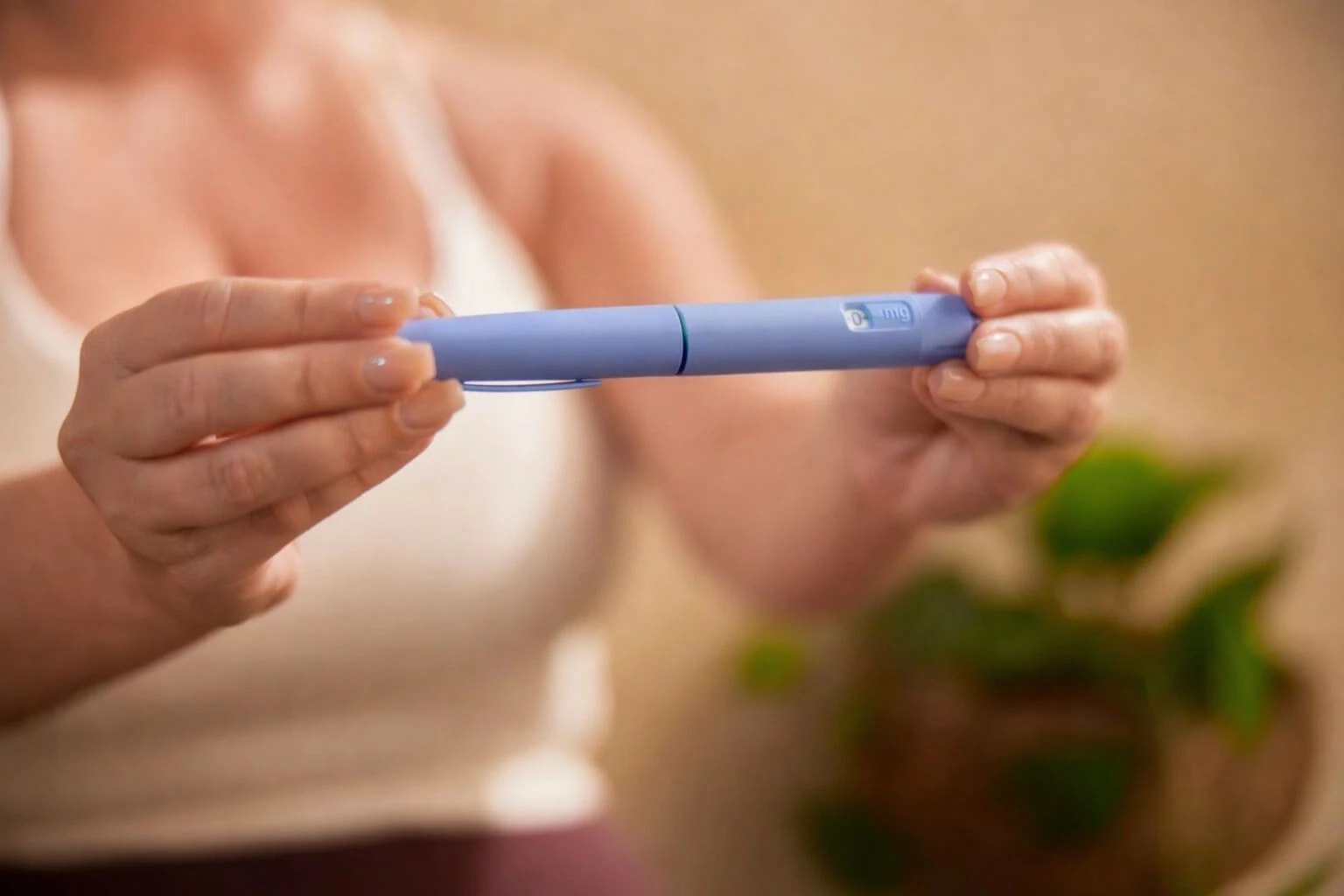
Saxenda for weight loss in obesity - price, results and side effects.
Saxenda is a medication by prescription containing a peptide called liraglutide. Liraglutide mimics the function of a natural incretin hormone called glucagon-like peptide-1 (GLP-1).
As a result, it has a variety of effects on the body and is approved by the European Medical Association (EMA) for a wide range of conditions:
- Blood sugar control in type 2 diabetes (T2D)
- Reducing cardiovascular risk in T2D
- Weight management in adolescents and adults
In this article, you will learn detailed information about the benefits, risks, dosage, and application of Saxenda.
What is Saxenda?
Saxenda (trade name of the peptide liraglutide) is a synthetic peptide developed by the Danish pharmaceutical company Novo Nordisk in 1990.
Peptides are substances made up of amino acids (like proteins) that occur naturally in all living organisms, including humans.
Saxenda was developed as a blood sugar and appetite control drug that mimics the naturally occurring hormone GLP-1 in the human body, but has a longer half-life when it enters the body [1].
Saxenda has a 97% identical structure to natural GLP-1 [2]. The three percent difference comes from 2 main modifications:
- Addition of a fatty acid (palmitate) to the amino acid lysine at position 26 in GLP-1, which helps slow renal excretion due to binding to serum albumin.
- The amino acid lysine is replaced with arginine at position 34 in natural GLP-1, which further increases the stability of the peptide.
These modifications help increase the half-life (the time it stays in the body) of the peptide by up to 13 hours, allowing Saxenda to be effective even when dosed only once a day [3].
The EMA has consistently approved Saxenda for medical use in people with various conditions:
- Liraglutide (the ingredient in Saxenda) received its first approval from the EMA in 2009 for the treatment of type 2 diabetes (T2D) [4]. Specifically, the peptide is approved as a subcutaneous injection at a dose of up to 1.8 mg/day under the trade name Victoza.
- Victoza is also approved to reduce the risk of cardiovascular events in patients with T2D [5].
- In 2015, liraglutide, under the trade name Saxenda, was approved at a higher dose of 3 mg/day for the treatment of adults with overweight (and at least one disease related to overweight – high blood pressure, gout, etc.) or obesity [6].
- In 2021, Saxenda also received approval for use in adolescents who are overweight or obese [7].
Does Saxenda Work? Basic Mechanisms
Saxenda works by mimicking the action of GLP-1 and activating its receptors in various organs:
- Pancreas – Saxenda stimulates insulin secretion by activating beta cells in the pancreas and inhibits glucagon secretion from alpha cells. This makes it extremely effective in controlling blood sugar in T2D [8].
- Digestive system – Saxenda may delay gastric emptying, which reduces the postprandial glucose spike. Studies with Saxenda at a dose of 3 mg/day have shown a 23% reduction in the rate of gastric emptying within the first hour after food consumption [9].
- Adipose tissue – By interacting with GLP-1 receptors in adipose tissue, Saxenda can reduce the release of triglycerides into the blood and improve insulin sensitivity [10].
- Brain – Saxenda activates GLP-1 receptors in the central nervous system, which leads to a decrease in appetite and plays a key role in its effectiveness for weight loss in overweight and obese people [11, 12].
By interacting with GLP-1 receptors in the brain, Saxenda is also thought to provide neuroprotective benefits, although the peptide is still being studied for its potential against neurodegenerative conditions [13].
Additionally, research is currently underway into the potential effects of Saxenda on obesity-related conditions such as polycystic ovary syndrome (PCOS) and fatty liver (non-alcoholic fatty liver disease, NAFLD) [14, 15].

Saxenda Results | Latest Scientific Data
Evidence suggests that Saxenda offers a wide range of benefits for weight control, metabolism, and cardiovascular health.
Some of the studies involve almost 4,000 participants and last for more than a year. The most important of them you will find in the following lines:
Weight loss with Saxenda
Saxenda is approved for weight loss and weight loss after evaluating efficacy and safety in three large clinical trials (phase 3), which are part of Novo Nordisk's clinical program called SCALE (Satiety and Clinical Adiposity – Liraglutide Evidence in individuals with and without diabetes).
These trials, each lasting 56 weeks, included a total of more than 5,000 overweight and obese participants, with and without T2D.
During the studies, participants received a daily dose of 3 mg of Saxenda or placebo, as well as advice on following a low-calorie diet and regular exercise:
- The first and largest study included 3,731 patients without T2D and a body mass index (BMI) above 27 kg/m2. After 56 weeks, participants who received Saxenda (along with diet) lost about 8.4 kg (about 81% from baseline), while those in the placebo group (along with diet) lost 2.8 kg (on average) [16].
- The second study included 846 overweight or obese patients with T2D and reported that the peptide led to a weight loss of about 6 % (6.4 kg on average) in these patients [17].
- In the third case, the effect of Saxenda on long-term maintenance of weight loss in obese individuals was studied and favorable results were also reported [18].
Saxenda has also been approved by the EMA for use in obese adolescents aged 12-17 years based on a study of 251 subjects. The trial included 125 adolescents in the Saxenda group and 126 adolescents in the placebo group.
The Saxenda group showed a significant improvement in BMI-for-age (Z-score) compared to the placebo group after 56 weeks. In addition, a greater number of participants in the Saxenda group achieved a BMI reduction of at least 5% and 10% compared to the placebo group [19].
Saxenda improves blood sugar control in type 2 diabetes
Another major and approved use of Saxenda is for blood sugar control in T2D. This is based on six studies (phase 3) known as the LEAD studies.
They compared the glucose-lowering effect of Saxenda with placebo, oral antidiabetic drugs, basal insulin, and other GLP-1 agonists (exenatide).
The studies lasted 26-52 weeks and included daily doses of Saxenda up to 1.8 mg. According to the data, Saxenda led to better glycemic control and greater weight loss among patients with T2D in all six trials [20, 21, 22, 23, 24, 25].
All LEAD studies were included in a 2016 systematic review that summarized data from a total of 43 randomized trials of Saxenda in T2D. The review reported that Saxenda significantly reduced glycated hemoglobin (HbA1c) by 0.91%–2.21% within 6 months of starting treatment.
The researchers also reported that Saxenda therapy resulted in weight loss of up to -8.65 kg (from baseline) [26].
Saxenda reduces cardiovascular risk in diabetics
Saxenda has shown efficacy in reducing the risk of cardiovascular events in patients with T2D.
Its approval for this indication is based largely on the LEADER study, which included over 9,000 participants and had a median follow-up period of 3.8 years [27].
In the LEADER study, a single daily dose of 1.8 mg liraglutide demonstrated significant efficacy in reducing the occurrence of major adverse cardiovascular events, such as heart attacks and strokes.
The study showed that the risk of fatal myocardial infarction (heart attack) was 401% lower and the risk of fatal stroke was 361% lower among participants. In addition, the overall risk of cardiovascular events was reduced by 131% and the risk of death from any cause was reduced by 151% compared to the placebo group [28].
Saxenda and Alzheimer's disease
Preliminary evidence suggests that Saxenda may have anti-inflammatory and neuroprotective effects in various degenerative diseases, such as Alzheimer's disease. For example, a clinical trial was conducted to evaluate the effect of Saxenda on various aspects of Alzheimer's disease [29].
Specifically, the study examined brain glucose uptake, cognitive performance, cortical volume, and safety in individuals with mild to moderate Alzheimer's disease.
The study included 204 participants and was conducted as a phase 2 trial over a period of 12 months. During this trial, participants were randomly assigned to receive either Saxenda or placebo.
The study results showed significant improvement in cognitive function and greater cortical volume in the Saxenda-treated group compared to the control group [29]. However, it is important to note that further research is needed to confirm and develop these results.
Saxenda for weight loss | What you need to know?
According to the majority of available studies, Saxenda achieves a weight loss effect by suppressing appetite.
Specifically, Saxenda appears to reduce hunger by activating GLP-1 receptors in areas of the brain involved in appetite regulation, such as the arcuate nucleus in the hypothalamus [30].
These neurons express the so-called proopiomelanocortin and cocaine- and amphetamine-regulated transcript (POMC/CART).
Saxenda directly activates POMC/CART neurons, leading to increased satiety. The peptide also indirectly suppresses several appetite-stimulating hormones called neuropeptide Y (NPY) and agouti-related peptide (AgRP) [31].
Saxenda may also stimulate the secretion of another appetite-suppressing hormone called peptide YY (PYY), which also signals the brain to reduce hunger. The peptide may also prevent a drop in the satiety hormone leptin.
Leptin is normally produced by adipose tissue and its levels drop during fat loss, leading to increased hunger. Maintaining higher levels of leptin and PYY may also explain the beneficial effect of Saxenda on long-term weight loss [30, 32].
As a result, several systematic reviews have shown that the appetite-suppressing effects of Saxenda can lead to significant weight loss.
For example, a 2022 meta-analysis included seven phase 3 and four randomized controlled trials that lasted at least one year. The analysis pooled data from a total of 6,028 obese or overweight adults, with or without T2D.
The results revealed significant weight loss with Saxenda, with a mean difference in percent weight change of -4.81% compared to the placebo group [33].
Another 2022 meta-analysis also included 14 randomized controlled trials and reported that Saxenda can lead to significant weight loss. The data revealed that 3 mg/day of Saxenda taken for 20-56 weeks resulted in an average of about 4.9 kg more weight loss compared to placebo [34].
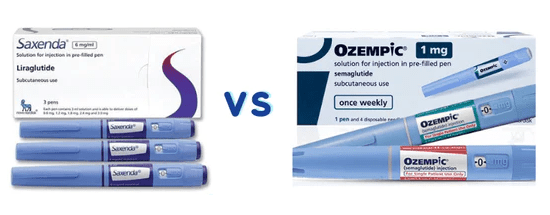
Saxenda or Ozempic for weight loss?
Like Saxenda, Ozempik (semaglutide, Vegovi) is an incretin mimetic that activates GLP-1 receptors and is currently approved by the EMA for glycemic control in T2D and weight loss.
One of the main differences with Saxenda is that Ozempic has a much longer half-life, allowing it to be administered once a week rather than once a day [35Ozempic is also approved for reducing cardiovascular risk in T2D [36].
A meta-analysis compared the weight loss effects of Saxenda and Ozempic. The analysis included 23 randomized controlled trials with a total of 11,545 patients and four interventions (Ozempic 2.4 mg, Ozempic 1.0 mg, Saxenda 3.0 mg, and Saxenda 1.8 mg).
The results showed that in terms of weight loss efficacy, Ozempic 2.4 mg had the best results (−12.47 kg), followed by Saxenda 3.0 mg (−5.24 kg), Ozempic 1.0 mg (−3.74 kg), and Saxenda 1.8 mg (−3.74 kg). Ozempic 2.4 mg and Ozempic 1.0 mg, as well as Saxenda 1.8 mg, were more effective in reducing HbA1c levels compared to placebo.
Regarding safety, the incidence of adverse events was highest with Ozempic 2.4 mg, followed by Saxenda 3.0 mg, Saxenda 1.8 mg, and Ozempic 1.0 mg. The incidence of serious adverse events was highest with Saxenda 3.0 mg, followed by Saxenda 1.8 mg, Ozempic 2.4 mg, and Ozempic 1.0 mg. Hypoglycemic events were most common with Ozempic 2.4 mg, followed by Saxenda 3.0 mg, Ozempic 1.0 mg, and Saxenda 1.8 mg [37].
Saxenda or Munjaro for weight loss?
Munjaro (tirzepatide, Zepbound) is a dual incretin agonist because it also mimics the function of another incretin hormone, glucose-dependent insulinotropic polypeptide (GIP).38]. Munjaro is a first-in-class drug that was only recently (2023) approved for weight loss [39].
It is also administered once a week. Munjaro shows better results in terms of weight loss compared to both Saxenda and Ozempic, regardless of dose [40].
In 2024, Mundjaro was approved for use in Europe for weight loss and type 2 diabetes control. And in 2025, Mundjaro was already available in Bulgaria. Everything about Munjaro for weight loss can read here.
Saxenda side effects
Studies have revealed that the peptide is well tolerated by obese and diabetic patients, and the most common side effects include transient gastrointestinal problems [41].
The most common gastrointestinal reactions occurred in 10-40% of people taking 3 mg/day of Saxenda for weight loss, and included:
- nausea
- diarrhea
- vomiting
- constipation
Saxenda can also cause headaches, rapid heartbeat, and other gastrointestinal problems, which affect about 101% of people [42].
In rare cases, patients may experience allergic reactions or local reactions at the injection site, such as pain, bleeding, redness, swelling, and itching.
Rare but more serious side effects can include cholestasis and related pancreatitis or gallbladder disease, which manifest with severe abdominal pain, vomiting, fever, and yellowing of the skin or eyes [43].
Is Saxenda safe? | Saxenda side effects
Saxenda is considered safe and has been approved by the EMA for the treatment of T2D, overweight and obesity in individuals over 12 years of age based on multiple clinical trial data.
Recent studies have shown that Saxenda is generally well tolerated by most study participants, and side effects are rare [44].
However, it is worth noting that Saxenda is not recommended for pregnant and breastfeeding women due to the unknown safety profile of the drug in these groups.
Additionally, animal studies have shown a potential risk of thyroid cancer associated with Saxenda.
However, this risk has not been confirmed in human trials, although the drug has now been used for years, studies have been conducted among tens of thousands of people, and the drug is under active monitoring by the EMA for possible side effects among patients to whom it is prescribed [45].
How to take Saxenda | Dosage by schedule
The maximum recommended dose of Saxenda for weight loss is 3 mg/day, but it can be adjusted depending on individual tolerance [46]. For reference, the recommended dose of Victoza for the treatment of T2D is up to 1.8 mg/day [26].
It is recommended that therapy be started with a low daily dose of 0.6 mg/day and gradually increased by 0.6 mg over five weeks. This helps reduce side effects among study participants.
Additionally, studies suggest that Saxenda can be administered for extended periods of time at a dose of 3.0 mg/day, with the peptide not having to be cycled. Instead, published studies reveal that the most common dosing protocols are 20-68 weeks in duration [37].
Here is a sample Saxenda dosing protocol for a weight loss study based on published data [37, 47]:
- Saxenda dose: Start with 0.6 mg/day in the first week, followed by an increase to 1.2 mg/day in the second week, 1.8 mg/day in the third week, 2.4 mg/day in the fourth week, and 3.0 mg/day in the fifth and subsequent weeks.
- Dosage frequency: Once daily at regular times.
- Duration: 20-68 weeks.
- Notes: The daily dose of Saxenda should never exceed 3mg/day.
Saxenda can be injected at any time of the day, regardless of your meal.

Is Saxenda effective and safe for weight loss in overweight and obese people? Doctor's opinion:
„When used as prescribed and under the strict supervision of a specialist, Saxenda is an effective tool for reducing appetite and helping to combat overweight and obesity. Possible side effects can be manageable with the right dosage. Common side effects include gastrointestinal problems, especially nausea, which are usually most pronounced at the beginning of treatment and tend to decrease or disappear within a few months. Individuals with a predisposition to pancreatitis or gallstone disease may be at higher risk of serious complications, which requires regular monitoring by a medical professional. Despite animal studies, human studies do not indicate a risk of cancer or other serious side effects.“
Frequently Asked Questions (FAQ)
In the following lines, we will answer some of the most frequently asked questions by patients about Saxenda.
Are there Saxenda tablets?
No, Saxenda contains a peptide called liraglutide which is quickly broken down by enzymes and acids in the stomach, and is not effective when taken in tablets.
Is there a natural substitute for Saxenda?
No, there are no supplements or nutrients that mimic the function of incretin hormones in the same way that medications from the Saxenda group do.
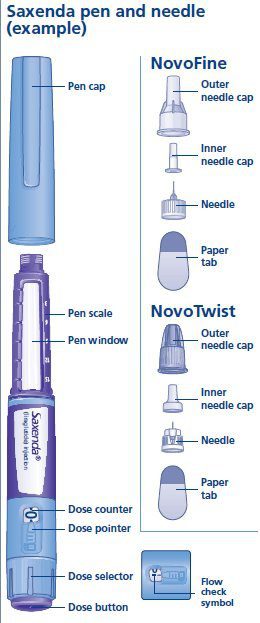
What is Saxenda pen?
The Saxenda pen is the device that contains the medication. It is a pen-like device used to inject insulin. It can be set to doses from 0.6 to 3 mg. It works with very small, thin hypodermic needles, which are sold separately.
Are Saxenda insulin injections for weight loss?
It is incorrect to call Saxenda and similar medications insulin injections. They do not contain insulin, and stimulate increased insulin secretion from the pancreas only when blood sugar is high.
What is the price of Saxenda in Bulgaria?
The price of a package containing 3 Saxenda pens is around 250-300 BGN. Each pen contains 18mg of the peptide and is sufficient for 6 doses of 3mg. In other words, each package (3 pens) contains a total of 18 doses of 3mg, but if you stay on a lower dose, the number of doses increases proportionally (up to 90 doses at 0.6mg/day).
How long will one pack of Saxenda last me?
Saxenda therapy starts with a much lower dose of 0.6 mg/day which is gradually increased over a minimum of four weeks. One pack is completely sufficient for the first four weeks of therapy (+ there will be 4 more doses of 3 mg/day left), after which you will need a new pack every 18 days. In reality, Saxenda can be dosed much more slowly, with the first pack lasting up to 90 days.
If you found this article helpful, feel free to follow me on social media for more evidence-based content.

4 thoughts on “Саксенда за отслабване при затлъстяване – цена, резултати и странични ефекти”
As a dietitian, is there any way you can prescribe this medication to patients?
Hello, yes, after consultation.
Hello,
You write that Saxenda can be dosed more slowly in some patients, could you explain how it can be dosed more slowly and what this depends on?.
Hello, it depends on whether the patient has side effects and how fast the weight loss is in kilograms/centimeters from the waist. If there are side effects such as nausea or diarrhea, or the weight loss is too slow, then the patient may stay on the individual intermediate doses for much longer than 7 days, and in very rare cases – dose every other day.